- Stock: In Stock
- Model: ENCLO
Support Natural Testosterone Production, LH, FSH and Male Fertility
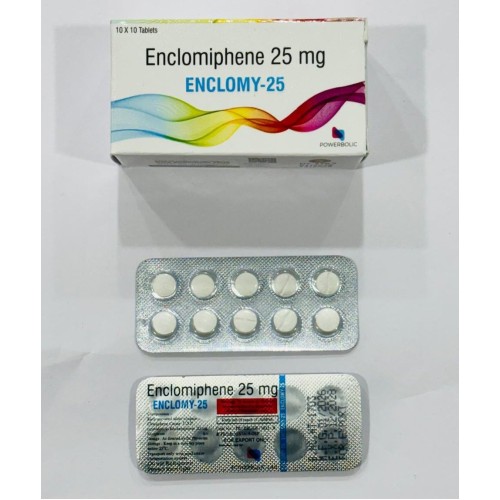
What Is Enclomiphene 25mg?
Enclomiphene 25mg is a medication used by some men to support natural testosterone production. It is often discussed as a fertility-friendly alternative to traditional testosterone replacement therapy because it may help the body continue producing testosterone naturally.
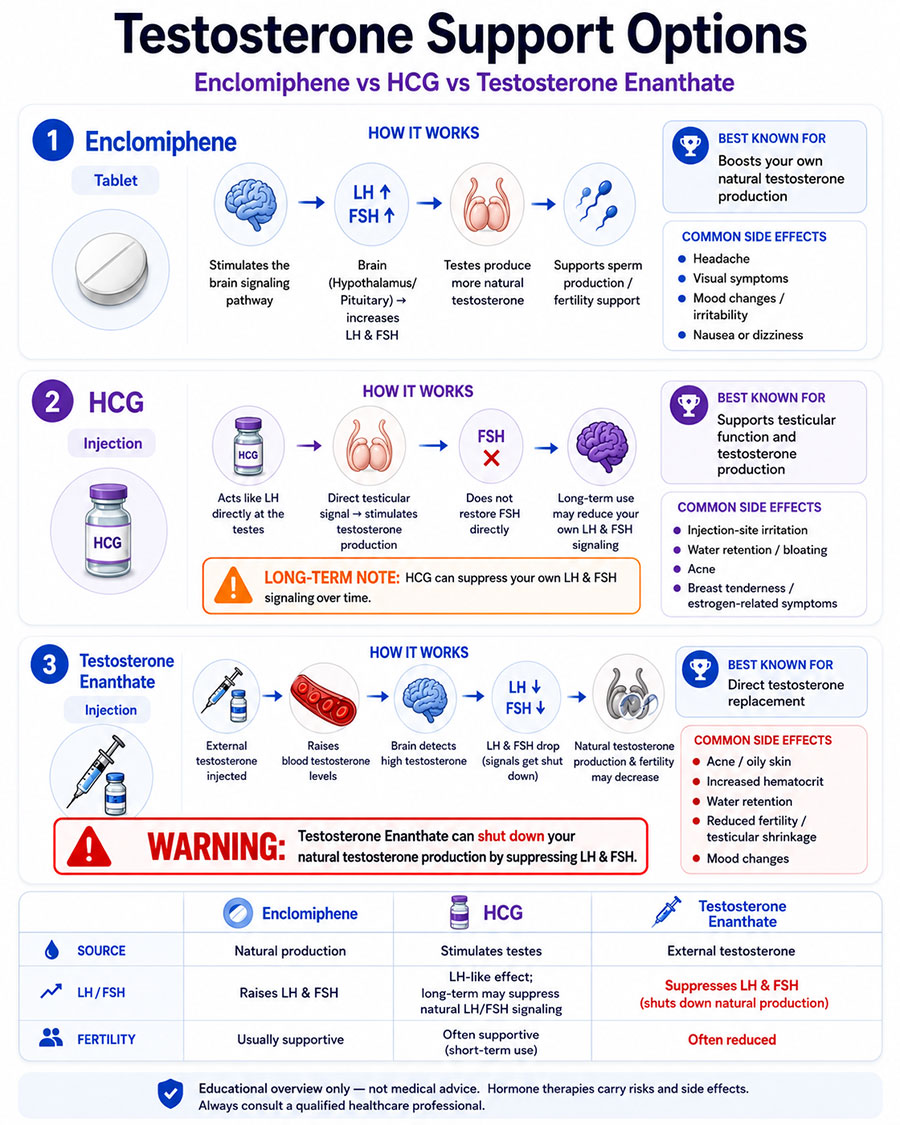
Instead of adding testosterone from outside the body, enclomiphene helps stimulate the body’s own hormone signaling system. This makes it different from standard TRT protocols, which can often reduce natural LH and FSH levels.
How Enclomiphene Supports LH, FSH and Testosterone
Enclomiphene acts on the hypothalamic-pituitary-testicular axis, often called the HPT axis. This is the communication system between the brain and the testicles.
By reducing estrogen feedback at the brain level, enclomiphene may increase the release of two important hormones: LH and FSH.
LH, or luteinizing hormone, signals the Leydig cells in the testicles to produce testosterone. FSH, or follicle-stimulating hormone, supports sperm production and male fertility.
Fertility-Friendly Testosterone Support
One reason enclomiphene is commonly discussed is that it may help support testosterone production while keeping LH and FSH active. This is important because LH and FSH are closely connected to testicular function, sperm production, and male fertility.
Traditional testosterone therapy can often lower LH and FSH because the body senses that testosterone is already being supplied externally. Over time, this may reduce natural testicular activity, sperm production, fertility, and sometimes testicular size.
Enclomiphene works in a different direction by helping maintain or increase the body’s own hormone signals. For many suitable men, this means natural testosterone production is supported rather than shut down, while LH and FSH may continue signaling the testicles to stay active.
Does Enclomiphene Shut Down Natural Testosterone Production?
Enclomiphene is different from traditional testosterone replacement therapy because it is not designed to replace testosterone from outside the body. Instead, it works by encouraging the body’s own hormone signaling system to stay active.
Traditional TRT can often lower LH and FSH because the body senses that testosterone is already being supplied externally. When LH and FSH become very low, natural testosterone production and sperm production may decrease.
Enclomiphene works in the opposite direction for many suitable men. By helping increase or maintain LH and FSH, it may help keep the testicles active, support natural testosterone production, and support sperm production.
This is why enclomiphene is often discussed as a fertility-friendly testosterone support option, especially for men who want to avoid full hormone shutdown from standard TRT protocols.
Common Enclomiphene 12.5mg and 25mg Protocols
Common protocols often use 12.5mg or 25mg per day, depending on blood test results, symptoms, and doctor guidance.
Some men respond very well to 12.5mg daily, while others may require 25mg daily. More is not always better, because testosterone, estradiol, mood, libido, and possible side effects can vary from person to person.
Dose selection should be based on blood work and individual response rather than simply choosing the highest available dose.
Recommended Blood Tests Before Using Enclomiphene
Before starting enclomiphene, it is smart to check blood work. Important markers may include total testosterone, free testosterone, SHBG, LH, FSH, estradiol, prolactin, and sometimes thyroid and liver markers.
LH and FSH are especially important because they show whether the brain is already sending a strong signal to the testicles.
Who May Respond Best to Enclomiphene?
Enclomiphene usually works best in men with low or low-normal LH and FSH. In this situation, the testicles may still be capable of producing testosterone, but the signal from the brain may not be strong enough.
By increasing LH and FSH, enclomiphene may help the body increase its own testosterone production naturally.
If LH and FSH are already high, enclomiphene may not work as well because the brain is already sending a strong signal. In that case, the issue may be more related to how the testicles respond, and a different medical approach may be needed.
Follow-Up Blood Testing After Starting
Follow-up blood tests are important after starting enclomiphene. Many men recheck labs after 4–6 weeks to see how testosterone, LH, FSH, and estradiol respond.
This helps decide whether 12.5mg is enough, whether 25mg is needed, or whether the dose should be adjusted.
Educational Video About Enclomiphene
Watch this educational video to learn more about enclomiphene, natural testosterone production, LH, FSH, fertility-friendly hormone support, and how it may differ from traditional TRT.
🔗 Compare Testosterone Support Options
Want to compare different hormone support products? See our full For Men category with products commonly searched by men in Thailand.
Important Safety Information
Enclomiphene may not be suitable for everyone. Hormone levels, fertility goals, medical history, and current medications should be reviewed with a qualified healthcare professional before use.
Individual response can vary. Blood testing is recommended because testosterone, LH, FSH, estradiol, mood, libido, fertility markers, and possible side effects may differ from person to person.
This content is provided for informational purposes only and does not replace medical advice, diagnosis, or treatment.
Storage Information
Store in a cool, dry place away from direct sunlight. Keep out of reach of children.